NECC’s Top Notch Players Present Musical

(Left) Kendra Jones of Plaistow, NH; (front) Sarah Bird of Tewksbury; (Back) Hunter Gouldthorpe of Salisbury; and (right) E.P. Lehner of Salem, NH.

(Left) Kendra Jones of Plaistow, NH; (front) Sarah Bird of Tewksbury; (Back) Hunter Gouldthorpe of Salisbury; and (right) E.P. Lehner of Salem, NH.

The coming of age musical, “Edges: A Song Cycle” will be presented by Northern Essex Community College’s Top Notch Players on Friday, February 19, and Saturday, February 20, at 7:30 p.m. in the Chester W. Hawrylciw Theater on the third floor of the Spurk Building on the Haverhill campus.

The musical was written by Benj Pasek and Justin Paul in 2005 when they were 19-year-old undergraduates in musical theatre at the University of Michigan. They wrote their own show after being unhappy with the roles they were assigned in musical theatre productions.

The NECC adaptation will be directed by Northern Essex student Geehae Moon of Haverhill, with fellow NECC student Christian Doyle of Newburyport as assistant director. The musical director is Brian Nickerson of Amesbury.

Edges is a musical that confronts the trials and tribulations of becoming adults and the search for love, commitment, and meaning, says NECC theater professor Jim Murphy.

Tickets are $10 for general admission and $8 for students and senior citizens. Tickets are available at the door or at www.MVarts.info.

The musical’s most famous song, “Be My Friend”, has come to be commonly known as the “Facebook song”

In 2006 Pasek and Paul won a $20,000 Jonathan Larson Award, becoming the youngest to ever win the award, which was established by the estate of “Rent” composer Jonathan Larson to encourage composers, lyricists, and book writers at the beginning of their careers.

NECC offers an associate degree in Liberal Arts: Theatre Option which offers the opportunity to sample various aspects of theater. Individuals can take courses in acting, directing, improvisation, children’s theater and may earn credits for working on college productions in stage management and technical theater. Graduates can pursue many career paths or transfer to a bachelor’s program in acting, directing, or technical theater for employment as an actor, theater manager, house manager, stage manager, set, lighting, costume or sound designer, technical director, or scenic artist director.

For additional information or to request sign language interpreting contact Murphy at jmurphy@necc.mass.edu or 978-556-3377.

NECC Theater Students Participate in Kennedy Center Festival

Participants in this year’s Kennedy Center Theatre Festival include, (l to r front) Caitlin Kennedy, Geehae Moon, Abigail Seabrook, Ben Joyall, and Robert Mantegani. (Rear) Nate Joyall, Natalie Scott, Sarah Bird, Hannah Heckman-McKenna and Hunter Gouldthorpe.

Participants in this year’s Kennedy Center Theatre Festival include, (l to r front) Caitlin Kennedy, Geehae Moon, Abigail Seabrook, Ben Joyall, and Robert Mantegani. (Rear) Nate Joyall, Natalie Scott, Sarah Bird, Hannah Heckman-McKenna and Hunter Gouldthorpe.

Nearly a dozen current and former Northern Essex Community College theater students recently participated in the Kennedy Center American College Theater Festival (KCACTF) at Western Connecticut State University.

Hannah Heckman-McKenna of Salem, NH; Geehae Moon of Haverhill; Caitlin Kennedy of Methuen; Sarah Bird of Tewksbury and Abby Seabrook of Newburyport and their partners, Ben and Nate Joyall and Natalie Scott of Groveland; Armando Belliard of North Andover; and Hunter Gouldthorpe of Salisbury competed in the Irene Ryan Acting Scholarship auditions. To qualify to perform, students are nominated from college productions which have been entered in KCACTF. A representative of the festival, usually a professor from another participating college or university, serves as a respondent to the production and chooses the nominees.

Seabrook, competing against students from across New England and eastern New York State, was selected to be one of the 36 semi-finalists from a pool of nearly 300. Adrian Peguero of Methuen, a former Top Notch Player, who now attends Salem State University, was also a semi-finalist.

Moon and Robert Mantegani of New Market, NH, also presented scenes as part of the Student Directing Initiative (SDC), with NECC students as their actors. Mantegani was recognized for his work as a stage manager and Matthew Lundergan of Raymond, NH, now at Salem State University and a recent Top Notch Player, won the regional SDC and will travel to the national KCACTF in April.

While at the festival, students audition to be cast in stage readings of new plays being presented at the festival. Belliard was cast in one of the 10-minute plays and Moon was cast in a one-act play. Moon was singled out for a merit achievement for her work on this play.

Kristopher Schooner of Manchester, NH, who is now at the University of New Hampshire, was nominated while a student at NECC to participate in the Richard Maltby Jr. musical theater initiative at the festival.

NECC offers an associate degree in Liberal Arts: Theatre Option which offers the opportunity to sample various aspects of theater. Individuals can take courses in acting, directing, improvisation, children’s theater and may earn credits for working on college productions in stage management and technical theater. Graduates can pursue many career paths or transfer to a bachelor’s program in acting, directing, or technical theater for employment as an actor, theater manager, house manager, stage manager, set, lighting, costume or sound designer, technical director, or scenic artist director.

For additional information, contact Jim Murphy, coordinator of theater at NECC at jmurphy@necc.mass.edu or call 978-556-3377.


Piano Master Classes Offered at NECC

The Music Program at Northern Essex Community College will offer two free master classes in the art of piano playing by NECC music faculty member Christina Dietrich, Sunday, March 6, at 5 p.m. and Sunday, April 3 at 4 p.m. in the Hartleb Technology Center on the Haverhill campus, 100 Elliot St.

The purpose of these free workshops will be to give pianists the chance to perform and learn in a cooperative group setting. Solo piano works and instrumental and vocal works with piano accompaniment of various levels of difficulty will be explored. Various aspects of piano performance and preparation will also be discussed. Students at all levels of playing ability will benefit from attending these workshops.

Professor Dietrich has appeared as a soloist with several orchestras. She has performed on the stages of Jordan Hall in Boston, Symphony Hall in Boston, and Alice Tully Hall at Lincoln Center in New York. She earned a bachelor’s in music from the New England Conservatory of Music in Boston, her master’s in music from Boston University and pursued her Doctor of Musical Arts degree at that institution.

In addition to maintaining a concert career, Professor Dietrich is currently piano faculty and new department co-chair at Indian Hill Music, new faculty at the Steinway Piano Academy Boston/Natick, adjunct professor at both Mount Wachusett Community College and Northern Essex Community College, and founder/director of the Chopin Conservatory of Music on the North Shore.  She has held faculty positions at the New England Conservatory of Music, Brookline Music School and North Shore Community College. Professor Dietrich regularly presents master classes in the art of piano performance, and is the artistic director of the Summer Music Festival at Northern Essex Community College, now in its sixth season.

For more information about these workshops contact Christina Dietrich at cdietrich@necc.mass.edu.

Northern Essex Community College offers an Associate of Arts Degree in General Studies: Music and a Music Technology Certificate.

NECC Celebrates Black History Month

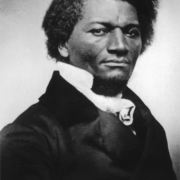
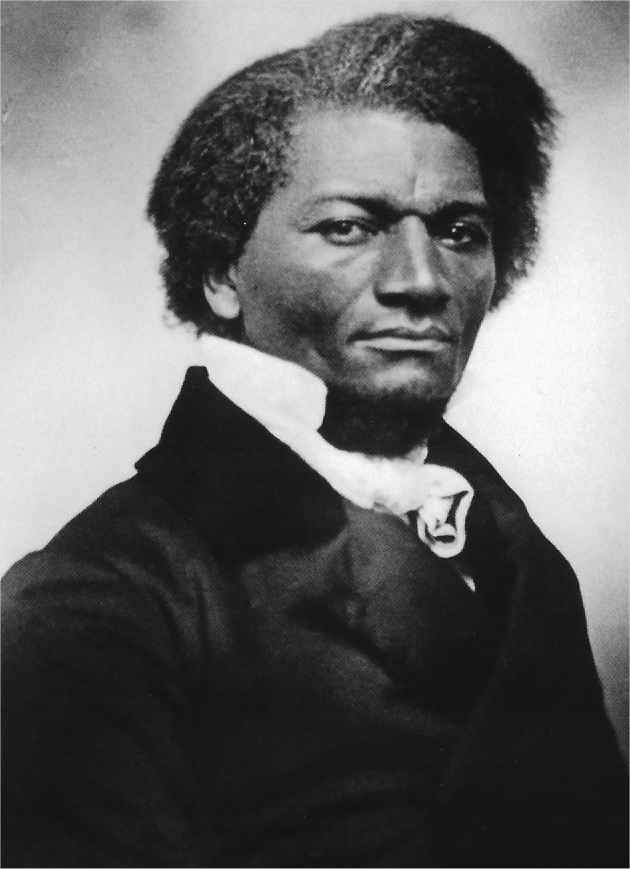
Frederick Douglass

Frederick Douglass

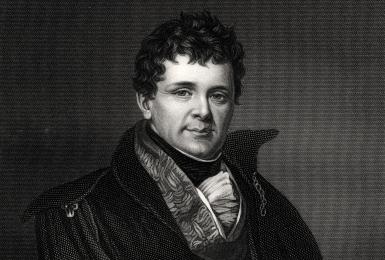
In the fall of 1845 two of history’s greatest liberators and orators met in Dublin, Ireland. That historic meeting is the focus of Northern Essex Community College’s Black History Month Celebration on Tuesday, February 16.

A stimulating lecture and inspirational story of that meeting between self-emancipated slave and abolitionist Frederick Douglass and Ireland’s Catholic emancipator and abolitionist Daniel O’Connell will be presented by educators Don Mullan and William H. “Smitty” Smith, Ed.D, from 2 to 3:30 p.m. in the Technology Center on the Haverhill campus and later at 6:30 to 8 p.m. in the Dimitry Atrium on the Lawrence campus. These events are free and open to the public.

The lecture and media presentation carries the inspirational message of “The Other Tradition” which is the idea that racism has a parallel, moral counterweight that promotes access, equity, and social justice.

Daniel O'Connell

Daniel O’Connell

The program includes the screening of the “Two Men Meet” segment from the public television documentary currently in production titled “An American Story: Race Amity and The Other Tradition”. It tells of the meeting between Douglass and O’Connell.

Mullan is the founder of “Hope Initiatives International” in Dublin, Ireland. He is the author of “Eyewitness Bloody Sunday” and co-producer of the film, “Bloody Sunday”. He initiated the Frederick Douglass Ireland Project and is a vis­iting professor at Drew University.

Smith is the founding executive director of the National Center for Race Amity at Wheelock College in Boston. He is producer and co-writer of “The Invis­ible Soldiers: Unheard Voices” which aired nationally on PBS.

For additional information contact Sharon McManus at smcmanus@necc.mass.edu or call 978-738-7803.

Math Skills Equal Success

Jim-Sullivan-Faces-of-NECC newsroomJim Sullivan believes everyone can conquer math and that strong math skills equal success.

This positive attitude is what he carries into his math classes, whether he is teaching basic algebra, math fusion, math literacy, statistics, or trigonometry.

Sullivan says he provides a classroom environment where everyone feels comfortable doing math. He also employs lots of group work where students complete assignments in teams of four. They work on activities that show how math is used in today’s world.

“To understand the universe,” he says. “You must understand the language on which it is built. That is mathematics.”

For example, math is the science behind global warming, he says.

“Taking the calculations of planetary temperatures along with the measurements of rapidly rising carbon dioxide in the atmosphere, indicate that the burning of fossil fuels does in fact release gases into the atmosphere that cause global warming.”

While Sullivan offers a supportive environment, he also cautions, “math is not a spectator sport.” If a student is willing to embrace the work and visit the math lab if necessary, then they can own the math class.

For 33 years, 11 at Northern Essex, Sullivan has been teaching math-phobes and mathletes alike on the virtues of math. He impresses on them the value of conquering math.

“Math opens doors to success in college, in careers, and in life,” he says. “Most major fields of study require students take one or more college level mathematics courses.  For example, an associate degree in Liberal Arts at NECC requires the completion of two college level mathematics courses. Entry into any STEM (Science, Technology, Engineering, and Math) career requires a very strong mathematical background.  Also the math involved in financial literacy is key to navigating student loans, car loans, and credit card debt.”

Over the years, he notes, the top ranking jobs for pay and satisfaction have consistently been those that require a strong background in math.

Sullivan holds a bachelor’s degree in mathematics and economics and master’s in mathematics from Boston College, where his dad was a math professor.

An NECC classroom, Sullivan says, is a great place to tackle math.

“It’s the best value in higher education, allowing any student the opportunity to take small classes with committed professors on their pathway to a career and/or transfer to a four-year college.”

Commissioner visits with Latino students on NECC campus

Eagle Tribune, 2-4-16, P. 1

BY ZOE MATHEWS

zmathews@eagletribune.com

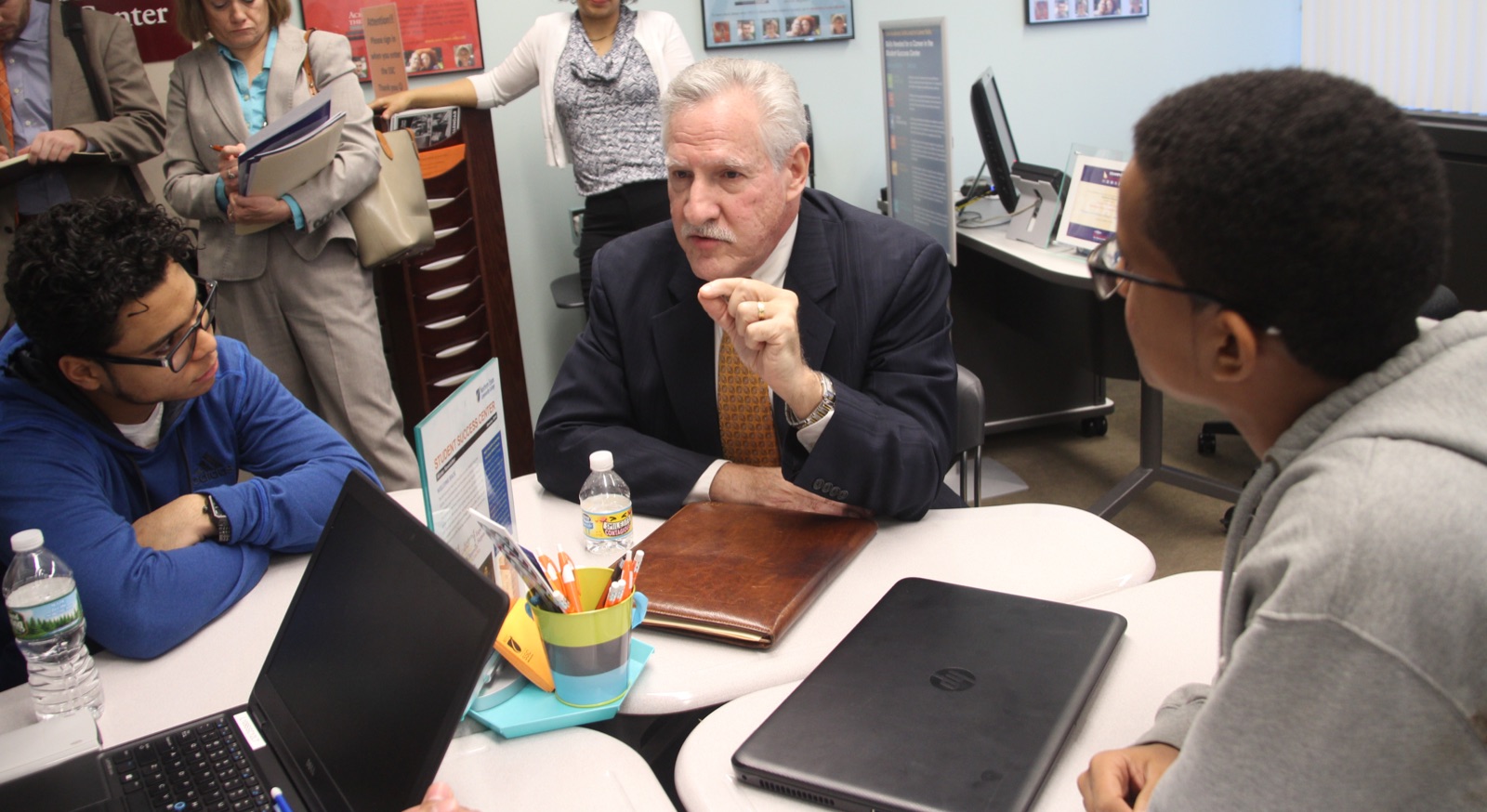
LAWRENCE — Carlos Santiago, the first Latino to be named Massachusetts Commissioner of Higher Education, Wednesday visited the Lawrence campus of Northern Essex Community College, where about 60 percent of the students are Latino.

“Massachusetts doesn’t rank as well as it can in supporting its students … especially its first-generation students,” he said. “That gatekeeper mentality of sink or swim was fine years ago, but we can’t afford anyone falling through the cracks in today’s economy.”

Santiago met with students in the Student Success Center (SSC), which opened in the 2011 with money from a Title V grant, and now serves about 600 students. The grants provide money to Hispanicserving institutions so they can maintain and expand educational opportunities. Each student he spoke to at the SCC is a first-generation college student with Latino roots.

Commissioner 1

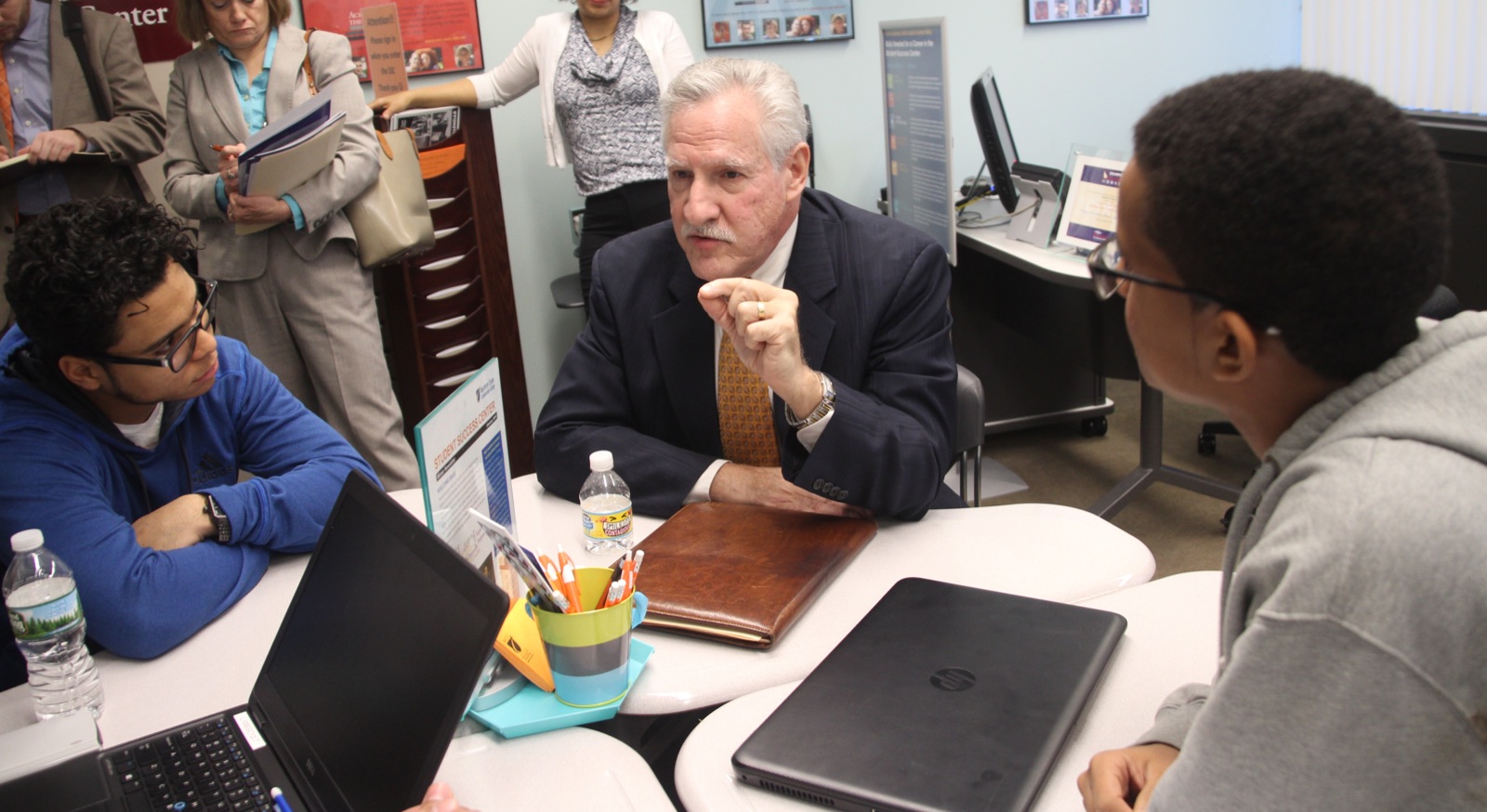
State Commissioner of Higher Education Carlos Santiago, center, speaks with NECC biology student Nathanael Sencion, left, and engineering student Maireny Rodriguez-Aquino, right.

Gisela Nash, director of the Student Success programs, said students who utilize the center show an 11.3 percent higher course completion rate and a 19 percent higher retention rate when compared with Latinos not using SSC services.

Santiago talked to students about some of the challenges they face — from access to English as a second language courses to the cost of books. He asked the students what resources they wish they had as incoming freshmen.

“There wasn’t a lot of information about summer classes or transfer credits,” said Carla Gonzalez, a business transfer student.

Maireny Rodriguez-Aquino, an engineering science student, agreed.

“People say community college takes two years, but something always comes up,” he said, “and we end up staying for longer.”

Santiago asked what else could be done to make sure students graduate on track, and the students said just having the SSC was a big help in keeping them motivated. Santiago talked about his efforts to make credits transfer to any public higher education institution in the state, and creating a path to a four year degree.

“Our work to create a unified system of transfer, though perhaps not characterized as glamorous, translates into direct timeand- money savings for these students,” Santiago said.

Noemi Custodia-Lora, Executive Director of the Lawrence Campus and Community Relations, talked about the school’s efforts to engage the community.

“We know that there are people here who graduated from other countries,” she said, “but that might not be able to transfer their qualifications when they move to Lawrence.”

NECC is also building relationships with colleges in the Dominican Republic as part of an effort to help residents pursue higher education. Mayor Daniel Rivera recently returned from a trip to the Dominican Republic where a formal agreement was signed between NECC and the Instituto Tecnico Superior Comunitario, the Dominican Republic’s first public two-year college which opened in January 2013. Glenn said partnerships with schools in Central America help students transfer credits easily.

Santiago came to Massachusetts as the Senior Deputy Commissioner for Academic Affairs in 2013, from Milwaukee, where he was Chancellor of the University of Wisconsin. He has over 30 years experience in public higher education.


February Trustees Report

Dr. Carlos Santiago, the Massachusetts commissioner of higher education, was the special guest at the February 3 meeting of the Northern Essex Community College Board of Trustees.

After spending a day at Northern Essex, meeting with students, faculty, staff, community partners, and business leaders on both the Haverhill and Lawrence campuses, the newly appointed commissioner reported that he was pleased with what he saw.  “Your students are thankful and appreciative of the education they get here.  And the links between the college and the community are strong.”

Dr. Santiago is visiting all campuses within the public higher education system to share his vision for public higher education in the state and learn more about each campus.

As commissioner, Dr. Santiago reported that he will be focusing on the three priorities outlined in the Vision Project: boosting college completion; closing achievement gaps; and attracting more students from underserved populations.

With each group that he met with, including the trustees, the commissioner shared statistics illustrating why educating more Massachusetts residents is critically important.

According to the commissioner, 50 percent of residents currently have a bachelor’s degree in a state where 80 percent of jobs require a bachelor’s degree.

“Employers tell us if we don’t find the talent, they will go elsewhere.  We need to be sure that Massachusetts remains on top.”

In order to achieve these goals, he said the DHE will focus on creating additional pipelines for transfer from community colleges to four-year colleges.  “This is part of getting students through more quickly,” he said.  Affordability will also be a major focus, and the commissioner hinted that a new initiative to make a public bachelor degree even more affordable than it currently is may be announced soon.

The first Latino Commissioner of Higher Ed in Massachusetts, Dr. Santiago is an economist who is a former CEO of the Hispanic College Fund and the former chancellor of the University of Wisconsin-Milwaukee.  Here’s a link to his bio.  He was appointed as commissioner by Governor Baker in July of 2015.


Academic Support Services

Is Focus of Educational Report


Donna Bertolino, assistant dean of academic support services, reported that the college’s PACE (Pathways to Academic and Career Excellence) program, which has been on campus for 35 years, providing support services for 250 low income, first generation students each year, has been refunded for five years.

The $2,195,760 million grant will fund four staff people.

Bertolino also shared that the college’s tutoring center, which was restructured last year to provide integrated tutoring services for students in developmental and college level courses, is helping an increasing number of students.  There has been a 28 percent increase in the number of students who are in college level courses visiting the center; a 68 percent increase in students using online tutoring; and a 7 percent increase in attendance at supplemental instruction review sessions, which are available weekly in selected courses.

According to Bertolino, the Testing Center in Lawrence has seen tremendous growth and is now offering walk-in testing four days and evenings per week.  The Haverhill Campus Testing Center was recently certified nationally as a Pearson VUE Test Center, offering 1000 certification exams.  The Testing Center was also recertified nationally and locally as a certified center for CLEP, HiSet, the College Board, and ATI testing.


Updates to Campus Smoking Policy


When the college’s current smoking policy—which allows smoking on campus in private vehicles only— was approved in 2008, devices like electronic cigarettes and vapors weren’t an issue.

Those devices have now become popular and, as a result, the college requested an addition to the current policy which would clarify that these kind of devices are not allowed on campus.

Trustees unanimously approved the new wording:

“The policy establishes the college as a smoke free environment at Northern Essex Community College and for the purpose of this policy smoking includes the burning of tobacco or any other material in any type of smoking equipment, including but not limited to cigarettes, cigars, pipes, or other devices such as e-cigarettes, or vaporizers.”


NEASC Gives NECC the Go-Ahead


President Lane Glenn reported that the college received good news from NEASC (the New England Association of Schools and Colleges), the college’s regional accrediting association.

The college fifth-year interim report was approved, meaning no additional reporting is required until the 2020 full ten-year report.

NEASC also approved two “substantive changes” for the college: an off-campus instructional location at Greater Lawrence Technical School (GLTS) and implementation of competency-based education.

The college has plans to launch an Advanced Manufacturing degree and selected courses will be taught at GLTS.  GLTS received $1.2 million in state funding two years ago to equip an advanced manufacturing lab that would be used by GLTS and NECC students.

The college also received permission to offer competency based education (CBE) programs, specifically in computer applications and art.  Competency based education is a new model of teaching and learning, which allows students to proceed at their own pace, receiving credit when they have mastered the material.


New Appointments


Trustees unanimously approved what President Lane Glenn called “a significant new position” at the college.

Effective in April, Kelly Saretsky will be the college’s dean of planning, institutional research & effectiveness.

“We’ve combined three areas of the college into one,” said Glenn.

Saretsky has been most recently the director of institutional research and planning at the College of North Atlantic in Qatar.  She has a PhD in higher education leadership from the University of Calgary.

The board also affirmed the appointment of eight employees who were hired during the winter intersession, including Daniel Richer, director of admissions & recruitment; Daniel Malave, director of student conduct, Jason Termini, instructor, Computer Information Sciences; Frederico Curty, staff assistant, Academic Technology, Library; Vengerflutta Smith, enrollment/academic counselor; Susan Leonardi, assistant librarian; Katelynn Donnelly, staff assistant, Public Safety and Transportation; and Revathi O’Neal, technical support analyst, Enrollment Services.


 

Classical Guitar Brings NECC Students Together

Not quite a guitar...strutted soundboards await completion.

Not quite a guitar…strutted soundboards await completion.

Can students of physics, engineering, and music find a common bond in the classical guitar?

Northern Essex Community College engineering professor Juan Oscar Azaret of North Andover thinks so and he has designed a one-night workshop and presentation to prove it.  “Curriculum Crossroads” will be held Wednesday, March 9, at 6:30 p.m. in the Hartleb Technology Center on the Haverhill campus, 100 Elliott St. the event is free and open to the public.

An engineer of 35 years, Azaret is also a classical guitarist and luthier (someone who makes or repairs string instruments) and a long time board member of the Boston Classical Guitar Society. Multitalented, Azaret has a multi-faceted appreciation of the classical guitar and believes others can too.

guitar heads newsroom

The guitar heads of classical guitars created by NECC engineering Professor Juan Oscar Azaret.

This idea that the classical guitar and the sound it produces can be of interest to students of varied disciplines was the catalyst for this event. The evening is designed around the idea of “the art and science of the classical guitar,” Azaret says, through performance, perception, design, and acoustics.

“This project will provide a vehicle for students in each of these fields to appreciate certain foundations and applications of their studies as they relate to each other,” he says. “We want them to be interested in the academics of it, but entertained as well.”

Working together with NECC physics professor Dr. Il (Johnny) Yoon, special laboratory and research assignments will be spawned from this presentation allowing the students to broaden their understanding.

guitar label newsroom

A Juan Oscar Azaret original created by NECC engineering Professor Azaret. Partially constructed guitars will be shown during the “Curriculum Crossroads” presentation.

The program will include performances of classical guitar works by Robert Ward, a professor at Northeastern University and Brookline Music School and concert guitarist. The focus will be on the music and how “beautiful and approachable music” is created on a classical guitar as well as how guitars are created. Partially constructed guitars will be available to show the anatomy of the instrument.

The second half of the night will be dedicated to examining sound. Specifically the science and engineering that creates the sound. Participants will be able to “see” sound through the use of a spectrum analyzer, oscilloscope, and vibrating string lab set-ups in an interactive audio visual presentation.

“It will link the instrument, the performer, the music, and the listener,” he says.

This presentation is funded, in part, through a new Academic Innovations Mini-Grant which was created by the college to encourage curriculum innovation.

“Educators submit programs that show they are engaging students in different ways to give them a broader, richer experience,” Azaret says.

Students from NECC’s physics, engineering, and music classes will be in attendance, and the public is invited to attend.

For additional information contact Juan Oscar Azaret at joazaret@gmail.com


DHE Commissioner has Whirlwind Tour of NECC

Commissioner 1

State Commissioner of Higher Education Carlos Santiago, center, speaks with NECC biology student Nathanael Sencion, left, and engineering student Maireny Rodriguez-Aquino, right.

Dr. Carlos Santiago, Massachusetts commissioner of higher education since July, visited Northern Essex Community College on Wednesday, Feb. 3. to share his priorities with faculty, staff, students, trustees, and community partners.

Dr. Santiago, who is the state’s first Latino commissioner of higher education, said he will focus on getting more people enrolled in college, increasing college completion rates, and closing achievement gaps.

This is important, he says, because only 50 percent of Massachusetts residents have a bachelor’s degree, and 80 percent of jobs require a bachelor’s.   He also reported that one third of our workforce is 55 years old or older, predicting a “slew” of retirements in the next 10 years.

“We need to create pipelines to help more Massachusetts residents graduate from college,” said Santiago.  “Employers tell us if we don’t produce a workforce with the skills they need they will go elsewhere.”

While in Lawrence, the commissioner met with staff and students in the NECC Student Success Center, which provides services including counseling, mentoring, and career exploration to approximately 600 students each year, the majority of whom are first generation Latino students.

He asked students what has been most helpful to them and what could be improved.

Maireny Rodriguez-Aquino, an engineering science major from Lawrence, described the challenges of trying to complete an associate degree in two years and the cost of textbooks.  “I will take fewer credits, so I have the money to buy books.”

Another challenge, especially for first generation students, is navigating the path to college.  “You need to encourage people to go to college.  Dealing with the MCAS, SATs, and college applications can be crazy,” said Rodriguez-Aquino.

The commissioner spent the morning on the Lawrence Campus.  In addition to visiting the Student Success Center, he attended an open house for the Guided Pathways to Success in STEM program, a grant funded program that helps align college programs with workforce needs; visited with the college’s education partners, including President Hays of Regis College, Jeff Riley, superintendent, Lawrence Public Schools; and John Lavoie, superintendent/director,  Greater Lawrence Technical School; and members of the Lawrence Partnership, a consortium of community and business leaders.

He spent the afternoon in Haverhill, meeting with President Lane Glenn’s cabinet and the college’s board of trustees.

Dr. Santiago is an economist who is a former CEO of the Hispanic College Fund and the former chancellor of the University of Wisconsin-Milwaukee.   He was appointed as commissioner by Governor Baker in July of 2015.  His visit to Northern Essex was part of his plan to visit all of the 29 colleges in the Commonwealth.

Cancer Diagnosis Sparks entrepreneur/philanthropist

NECC art student CJay DiPrima launched "Stay Positive Apparel" with a childhood friend after a diagnosis of NonHodgkins Gray Zone Lymphoma.

NECC art student CJay DiPrima launched “Stay Positive Apparel” with a childhood friend after a diagnosis of NonHodgkins Gray Zone Lymphoma.

Even though Northern Essex student and cancer survivor CJay DiPrima isn’t a chemistry major, he sure knew how to turn a negative into a positive.

When the Windham, NH, resident was diagnosed with a rare form of NonHodgkins Lymphoma, called “gray zone” in the fall of 2012, the news was devastating for DiPrima and his family. There are approximately 500 diagnosed cases of gray zone in the United States.

DiPrima, who was a student at Franklin Pierce University at the time he was diagnosed, took the spring of 2013 off and underwent intensive chemotherapy and radiation. His personal mantra throughout his ordeal was “stay positive”. He and childhood friend Tom Mullin thought the mantra might look interesting on a t-shirt and went to work designing one. When they realized “stay positive” wouldn’t fit on the front of the t-shirt, they shortened it to “stay +” with the thought they could change the + sign to different colors to represent different cancers.

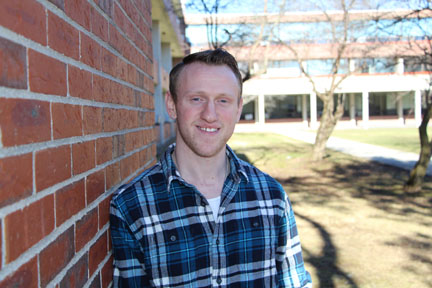
NECC student Cjay DiPrima (left) and childhood buddy Tom Mullin, who attended formerly NECC, are the founders of Stay Positive Apparel.

NECC student Cjay DiPrima (left) and childhood buddy Tom Mullin, who formerly attended NECC, are the founders of Stay Positive Apparel.

The t-shirts started to get noticed, he says. So he and Mullin wrote a short business plan, filed for an LLC in New Hampshire as Stay Positive Apparel, and started promoting the t-shirts on social media.

That lone t-shirt design has grown to include men’s and women’s tank tops, winter hats, baseball caps, sweatshirts, wristbands, and visors. The apparel are screened locally at a Pelham, NH, company – Body Rags. DiPrima and Mullin have a shipping station set up in the DiPrima home and ship their products all over the world.

“We donate 30 percent of all proceeds to the Massachusetts General Hospital Cancer Center for Children, which is where I was treated,” he says. “This was a way for me to give back for all they did for me”

To date, Stay Positive Apparel has donated close to $9,000 to MGHfC.

Now in remission, the entrepreneur turned philanthropist is slated to graduate from NECC in May with an associate degree in art with a focus on multi-media. He currently carries a 3.75 GPA.

The 22-year-old says his NECC classes have played a role in the company’s success.

“I love Northern Essex. I’m always designing and I’ve been able to incorporate my business designs into school projects and vice versa.”

DiPrima’s story has caught the attention of New Hampshire Chronicle, which will be airing a feature on Stay Positive Apparel on Thursday, February 4.

When DiPrima isn’t in school or working on Staying Positive Apparel, he stays busy bussing tables at Mary Ann’s diner in Windham, NH. He will transfer to Southern New Hampshire University in the fall taking 90 NECC credits with him. He plans on studying graphic design and media arts.

He and Mullin, who is studying business, would like to make Stay Positive a full-time gig. For now they are attempting to make the company a nonprofit and have a launched gofundme site to pay for the legal expense of filing for nonprofit status.