New to Remote Learning? Here are Some Tips

photo of laptop and glasses

Remote learning may be new to some, but there are tips to stay on track..

Finding Remote Learning Hard?
Here are Tips to Help You Succeed

On March 30, Northern Essex Community College transitioned all courses to remote learning in response to the COVID-19 pandemic.

While learning in the comfort of your home can sound cozy at first, I’m sure you’ve found by now that there are challenges. Dealing with computer and Internet issues; learning new technology; tuning out household distractions; and finding the discipline to set aside time for coursework can all have an impact on your academic progress.

And on top of all that, we are experiencing anxiety and stress worrying about the pandemic and our personal safety and that of our family and friends.
The transition has been a major adjustment for students—and faculty—who are all experiencing similar worries and challenges.

Three of the college’s experts on student success—Audrey Ellis, assistant director of student success management; Denise Trinidad, academic coach, and Linda Giampa, coordinator of academic coaching, have some tips to help students succeed in the new remote learning environment that they are eager to share:

Communicate with your professors

If you’re a millennial or from Gen Z, you may not use email that frequently, but this is often the best way to keep in touch with your professors. Check email often to connect with them and also communicate through Blackboard to ask questions and get support.
Collaborate with your peers

While you are no longer sitting next to your peers in class, it’s important to keep in touch with them by actively participating in online classroom discussions. Also, Navigate, the college’s student app and website, has Study Buddy, a tool you can use to reach out and arrange study sessions with your classmates.

Make time for learning

You need to carve out time for learning, and the best way to do this is to create a schedule for learning. Creating to-do lists will allow you to stay on top of everything you need to complete in your classes. Here’s some good advice on this topic from our friends in Canada.
Don’t lose your motivation

Taking care of your mental and physical health has to be a priority. While studying, sip on a glass of water or a soothing cup of tea and have healthy snacks handy. Also, don’t forget to schedule breaks and give yourself time to recharge. For some that means a walk outside, while for others a Netflix comedy may be the best stress reducer.

This isn’t a time for perfection. Your faculty understand how difficult this is for many of you, and they will be understanding as long as you keep in close contact with them.

Access Support Services remotely

Most support services are still available remotely.
Learn how you can access Tutoring, Career Services, Advising, Financial Aid, Food and Clothing Closets, Learning Accommodations, and more.
Questions?

Contact Audrey Ellis, aellis@necc.mass.edu; Linda Giampa, lgiampa@necc.mass.edu; or DeniseTrinidad, dtrinidad@necc.mass.edu
Also, if you’re interested on receiving tips and inspiration to help you succeed in this remote learning environment, follow @navigatenecc, a new Instagram focused on student success created especially for our students.
NECC Staff Sew Masks for Public Safety Officers

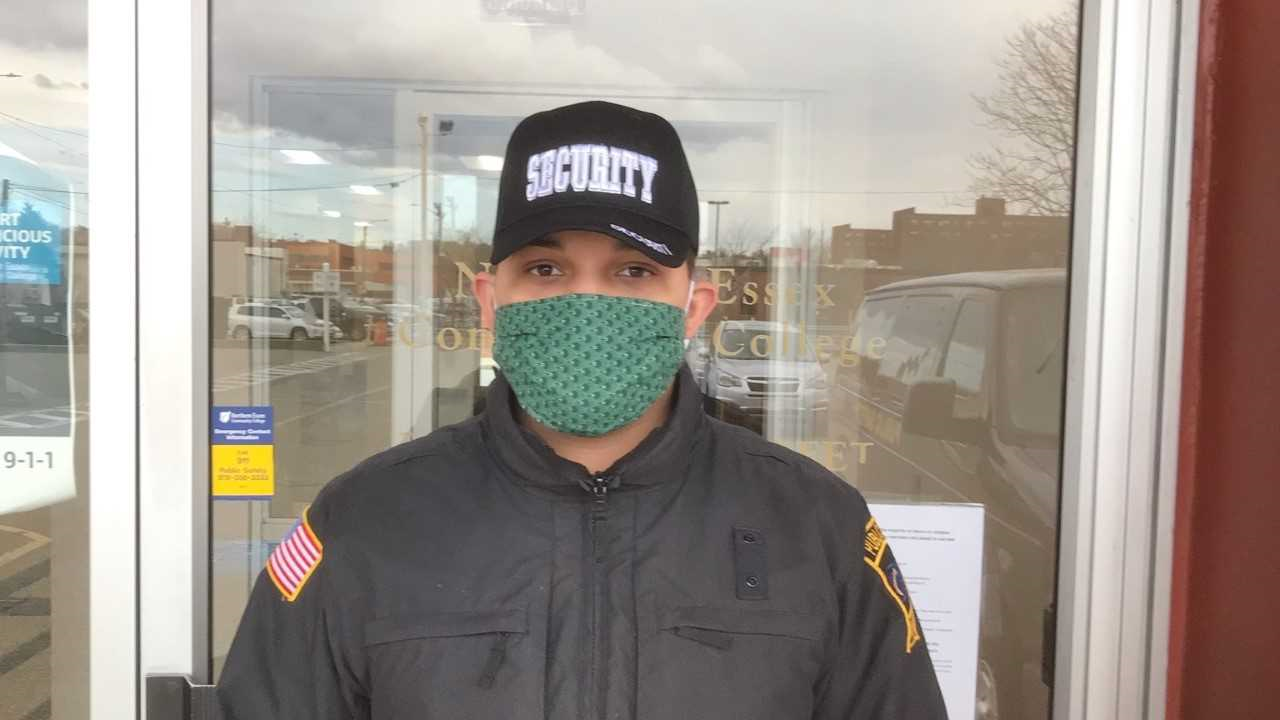
security officer Angela Mejia wears a mask made by NECC employees

NECC public safety officer Angel Mejia wears a mask made by NECC employees.

When two Northern Essex Community College finance team members learned the college was having a difficult time acquiring masks for its public safety officers, they elected to spend their weekend making masks for the officers.

Beth Donovan and Donna Ashbrook—along with several community volunteers—sewed 50 fabric masks for public safety officers during the first weekend in April.

“We had been trying to order masks, but none could be found,” said Northern Essex Chief Deb Crafts. “Most shipments are designated for state and federal use.”

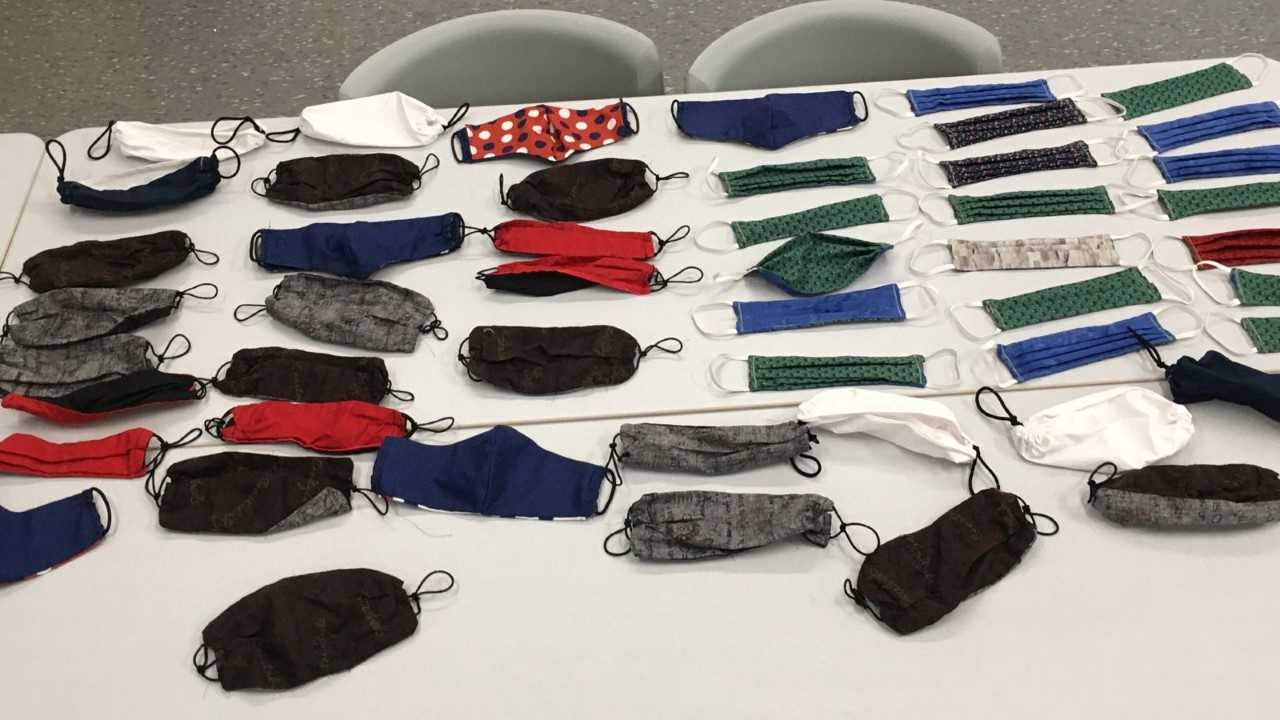
cloth masks spread on a table

A sample of the cloth masks created by two NECC employees.

Crafts, who met Donovan and Ashbrook in a college parking lot to pick up the masks, was deeply appreciative.

“As I watched them pull away, I felt an enormous amount of gratitude and pride in the NECC community,” she said

To learn more about how Northern Essex is handling the COVID-19 virus, visit the website.

Virtual Science Café is Open to Students and the Community

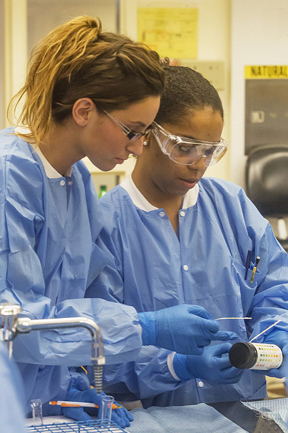
photo of two individuals dressed in PPE in a lab setting

High school and college students as well as the community are invited to attend a Virtual Science Café this month.

On Thursday, April 23, from 1:30 to 3 pm, Northern Essex Community College, the U54 Partnership between the UMass Boston-Dana Farber/Harvard Cancer Center and the Lawrence Mayor’s Health Task Force will host a Virtual Science Café that will connect the local community with researchers in an informal conversation focusing on cancer disparities and research.

Open to high school and college students as well as interested members of the community, the café will feature a diverse group of speakers, from professors to post-doctoral fellows, college students, and a behavioral health clinician. The program will be interactive and highlight the stories of researchers committed to social justice. Research opportunities for college students will be shared.

“We want to build connections between students, community members, and researchers, and highlight research-related career opportunities,” explains Sara Minsky, associate director, Center for Community-Based Research, Dana-Farber Cancer Institute. “We also want to communicate the importance of diversifying the public health and medical research workforce.”

This project is funded by the National Cancer Institute. If you have questions, contact Aileene Maldonado, Harvard Cancer Center U54 Partnership, aileeneamaldonado-campus@dfci.harvard.edu or 617-655-3746.

Register here.

NECC Emergency Fund Uncovers Tremendous Need

graphis of NECC students for emergency fundNorthern Essex Community College’s success in raising funds to benefit students who have been financially impacted by COVID-19 has been offset by the tremendous need that has been uncovered.

As of Friday, April 10, the college had received $10,425 in donations for the NECC Emergency Fund, which was created the third week in March. During the same time frame, 125 students, each with their own compelling story, have applied for and received funding.

“Within hours of announcing the availability of these funds, we had received 80 applications from students with stories that are heartbreaking,” said Allison Dolan-Wilson, NECC’s vice president of institutional advancement. “These students are determined to continue their education, despite the increased challenges they are now facing.”

The stories included:
A single mom who is now homeschooling her disabled child so unable to work to support her family, needs help with rent, internet, utilities and food.
A student, who lost her job as a note taker and, no longer has access to the college’s computers, is traveling to a relative’s home to access a computer, and needs a laptop of her own.
A part-time worker who is collecting only $69 a week in unemployment, when she made double or triple that when working, is asking for help paying her utilities, especially the internet which she needs to continue her studies.
A nursing student who because of lost wages had to take her savings fund for nursing uniforms and buy food, is looking for funding for her uniforms.

In addition to receiving a stipend to help them offset costs associated with the virus, students who apply for funding are being connected with other college and community resources to help them weather the crisis and continue with their studies, according to Dr.Jennifer Mezquita, NECC’s assistant vice president of student affairs. Those resources include the college’s student laptop loaner program, which was started in March and has helped 41 students to date, and community food banks.

Mark Van Weelden, market area manager, Covanta, responded quickly to Northern Essex’s request for help with a $1,000 donation.
“As a member of the NECC Foundation, I’ve seen how Northern Essex transforms the lives of its students. We wanted to do something to help offset the financial impact of COVID-19 for these students who are working so hard to get an education.”

The college is continuing to secure donations to the NECC Emergency Fund and will be making a special push on May 5, which has been designated by #GivingTuesday as a global day of giving and unity, in response to the need caused by COVID-19.
“Our students are driven, smart, curious, and unique, but they are also vulnerable” said Dolan-Wilson, “This fund is addressing some of their financial worries so they can stay in college and focus on their futures.”

If you would like to donate and help Northern Essex students, please contribute to the emergency fund or email Allison Dolan Wilson at adolanwilson@necc.mass.edu.

Students who would like to apply for funding can fill out a form created by Student Affairs. The Financial Aid Office will evaluate each request and do their best to find resources to support the need from currently existing funds as well as the NECC Student Emergency Fund.

For more information on applying for funds, contact Despina Lambropoulos, Financial Aid, dlambropoulos@necc.mass.edu.

NECC Students Help Trace and Track Massachusetts COVID-19 Patients

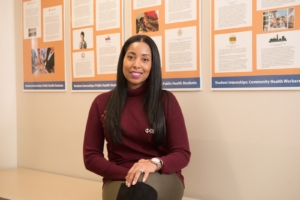
Portrait of Roseanna Lara sitting in an NECC hallway.

Rosanna Lara is one of NECC’s public health students volunteering on a task force that tracks COVID-19 patients.

Nine Northern Essex Community College (Haverhill and Lawrence, MA) Public Health students have joined Governor Charlie Baker’s recently announced initiative to address the spread of COVID-19 in Massachusetts.

Adding to their school, family, and work obligations, these students, along with volunteers statewide, are helping to track and trace COVID-19 patients with the goal of isolating the infection and stopping the spread of the virus.

After undergoing online training, they are contacting residents who were recently diagnosed with COVID-19 to see where they have been and with whom they have been in contact.

The Academic Public Health Volunteer Corps (APHVC) is a novel partnership that includes Partners in Health, the Massachusetts Department of Public Health, the Executive Office of Health and Human Services COVID-19 Command Center, the Massachusetts Health Officers Association, and the public health programs from 11 Boston educational institutions of higher education including Northern Essex. Other institutions include Northeastern University, Boston University, Tufts University, Harvard University, University of Massachusetts Lowell, University of Massachusetts Amherst, Simmons University, Regis College, and the Massachusetts College of Pharmacy and
Health Sciences.

The volunteers, once they complete online training, are deployed in teams to serve 351 boards of health in Massachusetts. The program is designed in four areas of concentrations, according to Jacqueline Dick, professor and program director of the NECC Public Health Associate Degree and Community Health Certificate programs. The APHVC will contact trace and track patients, coordinate with communities’ public health departments, disseminate information via social media/communications, and perform virtual check-ins with patients.

Dick said some of her students lost their internships due to COVID-19, so this is an opportunity for them to complete their mandatory hours not to mention gain valuable public health experience while sharing their own public health knowledge. Partners in Health intends to hire 1,000 paid public health positions in addition to the volunteer corps which will continue. It is hoped some of the NECC students will be considered and transition to employment.

Rosanna Lara of Lawrence, who has already earned a Community Health Certificate and is on track to graduate from the Public Health associate degree program in May, is anxious to get to work. She has already completed the initial training and is working on additional training.

“I hope that all of the knowledge that I have gained throughout my years in the Public Health program, along with all the required online training I received in the past few weeks, can help me contribute efficiently to collaborate in COVID-19 Contact Tracing,” Lara said.

“This was something some of the public health students definitely wanted to be involved with,” Dick said.

Massachusetts is the first and only state to create an APHVC, according to Dick. Since its inception, just a few short weeks ago, New Jersey and California have inquired about its creation and progress.

This model, said Dick, is one of the measures used to stem the spread of the Ebola virus in Africa.

“I told the students,” said Dick. “This is not a dress rehearsal. This is public health.”

Students participating include: Shaliwa Babirye of Lowell; Victoria Cerasuolo and Wendy Castro of Bradford; Chelsea St. Jean of Haverhill; Jatnyn Hernandez Rosanna Lara, Rebecca Shipweya, and Silvia Urena Polenco of Lawrence;
and Margaret Kamau of North Andover.

For more information about the NECC Public Health Program, visit the website or contact the college, admissions@necc.mass.edu, 978 556-3700.

Northern Essex offers and associate degree in public health and a certificate in community health. For additional information on either of these programs go to the program page.

Student Advocate is Named Civic Fellow

profile photo of Courtney Morin

Lawrence resident Courtney Morin.

Courtney Morin of Lawrence, has been named Northern Essex Community College’s Newman Civic Fellow for her outstanding leadership roles and devotion to advocating for community college students.

Morin, a biology and liberal arts: philosophy major, was nominated by NECC President Lane Glenn, who wrote, “College faculty and staff describe Courtney with words such as motivated, collaborative, innovative, dedicated, change-maker, and advocate.”

Morin has served as a voice for her fellow students and for social change everywhere.

During her first year at Northern Essex, in fall 2017, Morin became the president of the Amnesty International Club, where she initiated fundraising for refugees. In spring 2017, she started as a general member of the Student Government Association, an appointed group of students who strive to be the voice of the student body and uphold fair representation for all members of the college.

Morin has attended several advocacy days at the Massachusetts Statehouse to advocate for sexual assault prevention, college affordability, educational attainment disparities between white and Latinx students, housing and food insecurity, mental health and the interconnectedness of these issues. Morin currently serves as the Vice President of the Haverhill Campus for SGA.

In fall 2018, she was elected as the NECC Student Trustee to the Board of Trustees. In this role, she offers a student perspective on the issues and concerns impacting the college. She was elected to a second term in fall 2019.

“Beyond the NECC community, Courtney was elected in 2018 to serve as the Vice Chair of the Student Advisory Council to the Massachusetts Board of Higher Education, where she supported and promoted initiatives such as open educational resources (OER), changing student trustee eligibility requirements, and Every Voice Coalition’s bills, aimed at addressing sexual violence and misconduct on higher education campuses,” wrote. Glenn “Through these initiatives, she continues as a volunteer as Every Voice Coalition’s Campus Lead and as the OER Campus Student Representative for Northern Essex Community College.”

“Courtney recognizes that it is essential to build collaborations in her advocacy to create a strong voice to effect social change,” he wrote. “Her personal challenges have emboldened her to fight for change not only to benefit NECC students, but community college students across the state.”

Morin’s message to her fellow students and friends is: “that they must work together to accomplish their goals, that one member cannot do all of the work alone.”

The Newman Civic Fellowship distinguishes and supports students who have shown leadership and an investment in their communities across the country to help solve problems they may be facing. It is a yearlong fellowship program that provides a variety of opportunities for the student to network, learn, and grow. This includes attending a national conference of Newman Civic Fellows. The fellowship is named after Campus Compact founder Frank Newman, and focuses on the skills fellows will need to effectively and actively set and accomplish goals that address public problems and build equitable communities.

What is next for Morin? She is interested in the intersection of medical law, human rights, and bioethics and plans to transfer after NECC to a four-year-university as a double major in neuroscience and philosophy to prepare for entrance to law school. She hopes that no matter where the future may take her, that she is doing her part in making the world a more just place for all.

NECC Professor Assists Quarantined Passengers

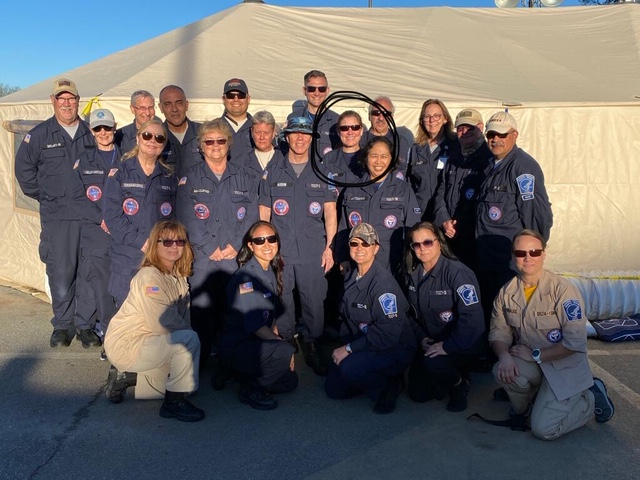
A group photo of trauma team members.

Rad Tech Professor Angela Bowers (center circled) with other members of the trauma team she was deployed with.

NECC radiologic technology professor Angela Bowers couldn’t have known a dozen years ago when she enrolled in a bone identification class that it would one day lead to her caring for cruise ship passengers during a pandemic.

But that is just what happened, according to the Derry, N.H. resident.

The mother of two just returned from a two-week deployment with the National Disaster Medical System (NDMS) where she served with the Trauma Critical Care Team – East monitoring patients removed from the Grand Princess and Diamond Princess cruise ships docked in California. More than 100 cruise passengers, from across the country, from infants to elderly, were flown to Dobbins Air Reserve Base in Marietta, Georgia, and quarantined in the barracks for 14 days, where Bowers cared for them.

The NDMS is a federally coordinated healthcare system and partnership of the U.S. Departments of Health and Human Services (HHS), Homeland Security (DHS), Defense (DOD), and Veterans Affairs (VA). The purpose of the NDMS is to support state, local, tribal and territorial authorities following disasters and emergencies by supplementing health and medical systems and response capabilities.

The 27-year rad tech veteran joined the NDMS more than 10 years ago. Bowers, who earned a certificate from St. Mary’s Hospital in West Palm Beach Florida, was working on her bachelor’s from Indian River State College, when she enrolled in the forensic anthropology course and first learned of the NDMS. After researching its role in disaster response she began the arduous task of applying. It took two years of paperwork and background checks for Bowers, who hold a master’s degree from Thomas Jefferson University, to be accepted. Bowers has spent the last 10 years attending online and in person trainings and summits preparing for an opportunity to assist in a disaster – natural or otherwise. The opportunity came when she was activated at 11:05 p.m. on March 12.

For 14 days her team provided direct care to the cruise ship passengers sent to Dobbins. Duties included monitoring passengers’ temperatures twice daily, swabbing patients suspected of COVID-19, and delivering packages, luggage, and necessary medications.

“COVID brought with it disruption and anxiety. Despite the cold and the rain we worked collaboratively to keep the passengers safe,” she said. “Initially they were frustrated and aggravated. Without their luggage, some didn’t even have essentials like shampoo, soap, or toilet paper. We built connections. They called us by our first names. We would bring non-essentials to them like chips or dark chocolate to make the situation better. Eventually they opened up to us and would have conversations with us.”

While Bowers certainly doesn’t wish for another disaster, and despite the 12 to 15-hour work days, she said her deployment was a positive experience. Colleagues, she added, became family.

“We don’t do this for pay. We do it to serve others,” Bowers said. “I enjoyed the experience and I think we made a difference. You could see the smiles under the masks.”

NECC offers an associate degree in radiologic technology. For more information on the program, visit the program page. Angela Bowers is program director.

Respiratory Care is Breath of Fresh Air for Business Major

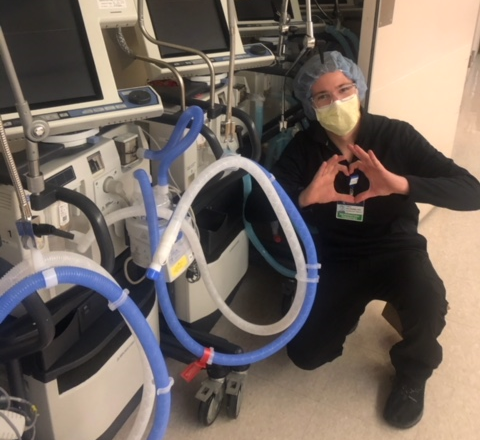
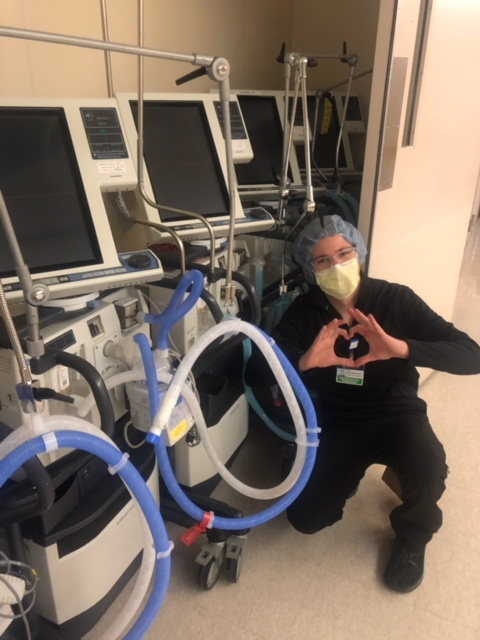
Troy Dalphond making heart hand gesture

Troy Dalphond found his calling in respiratory care.

Troy Dalphond was at a crossroads in his college education the day he accompanied his mom to the hospital and watched as a respiratory therapist brought her comfort.

“I saw that she was making a difference,” he said.

Dalphond started asking questions about respiratory care and he left the hospital that day with the name of Jennifer Jackson-Stevens, NECC’s respiratory care program coordinator. After researching respiratory therapy as a career option, he contacted Jackson-Stevens, withdrew from his business program, and enrolled in Northern Essex’s two-year respiratory care program.

He graduated from the program in May of 2019 and currently works at Beth Israel Deaconess in Boston, where he completed his last clinical rotation while a student. After just one year in the program, he was able to work part time under his student license at a Lowell area hospital.

“It’s a good paying job, there are plenty of job opportunities, and you make a positive impact on society,” the Methuen resident said. “Right now, they are especially needed.”

The 23-year-old says COVID-19 hasn’t diminished his resolve. While Dalphond has seen the virus at various stages from mild to critical, he says, he knows his work has a positive impact on society.

“Sure, it’s scary. It’s intimidating, but now that I’ve been in it I wouldn’t change anything,” he said. “I would never want to leave my team. There are  days that are hard, but they are offset by days that are great.”

Northern Essex offers a two-year associate degree in respiratory care. For additional information on the respiratory care program visit the NECC program page on our website.


Board of Trustees Update: April, 2020

President Praises College Faculty and Staff

President Lane Glenn praised the extraordinary effort that has been shown by faculty and staff over the past two weeks as the college transitioned to remote learning, due to the COVID-19 threat.

“The scale of what has been accomplished is flabbergasting,” said Glenn. “People have stepped up to provide assistance to one another. It’s been a whirlwind. I can’t begin to start naming individuals. We owe thanks to so many.”

When the semester started, 20 percent of credit courses were offered online and 15 percent were offered in a hybrid format including online and face-to-face learning.

“Two-thirds of our classes weren’t expected to be taught remotely,” said Glenn.

Using tools like Blackboard, Navigate, Zoom, Skype, and YouTube, each faculty member has created a remote learning plan appropriate for the course they are teaching.

The college is carefully monitoring announcements from Governor Baker and information shared by the Massachusetts Department of Public Health (MDPH), and the Center for Disease Control and Prevention (CDCP) and Glenn anticipates there will be announcements soon about continuing remote learning through the end of the spring semester and cancelling the May 16 commencement.

“Our employees and students have been through an awful lot,” said Glenn. “More of our students are going to be successful this year because of these efforts. As a trustee, I hope you share my pride in these people.

Federal Care Act will Provide some Benefit to NECC

The Care Act, a federal law that directs $2 trillion in funding to COVID-19 relief efforts will provide some benefits to Northern Essex, according to Glenn, who estimates the college will receive “a few million dollars”.

But he cautioned trustees not to “get too excited.” Direct expenses and lost revenue related to COVID-19 should total more than twice what the college will receive from the Care Act.

Five will Receive Emeritus Status

Five recently retired college faculty and staff will receive emeritus status after a unanimous vote by the trustees.

Those receiving emeritus status include Stephen Fabbrucci, vice president emeritus of human resources; Kerin Hamidiani, professor emerita dental assisting program; Nancy Julin, assistant dean emerita of health professions; Patricia Kidney, professor emerita of art & design; and Jean Poth, vice president emerita of institutional advancement.

At Northern Essex, the rank of emeritus is an honor that recognizes sustained excellence in performance, character, and meritorious service to the college. Emeritus status is given to a retired college employee based on recommendations by the college’s emeritus committee and approved by NECC President Lane Glenn.

Emeritus recipients are typically honored at Commencement.

Fees for Fall Semester Decided

Trustees voted unanimously to increase fees for FY2021 by $6 per credit. The increases will take effect in the fall of 2020.

“The increase is approximately 2 percent of the cost of student tuition and fees for next year,” said President Glenn.

All credit courses that are non-health related will increase to $193 per credit and allied health courses will increase to $273 per credit. The $20 per credit facility fee increase, which supports facility projects and operational needs, was also extended for another year. Trustees voted to temporarily increase this fee in FY18.


NECC Trained Alumni are on the Frontlines of COVID-19 Battle

Troy Dalphond

Coronavirus patients treated by Merrimack Valley and Boston healthcare workers will most likely cross paths either directly or indirectly with Northern Essex Community College students or alumni.

From the healthcare technicians who take a patient’s temperature and blood pressure to the phlebotomists who draw blood, the respiratory therapist who operate the precious ventilators and nurses who administer and oversee care, to the paramedics and EMT’s who care for and transport patients, NECC’s alumni are on the front lines hoping to tame the scourge that is COVID-19.

Northern Essex’s reach doesn’t end with direct patient care. Public health workers assist in disseminating news and best practices during a pandemic, lab technicians processing tests, and criminal justice majors enforce mandated closings and social distancing.

Alum Treats Boston Patients

Alumni like Troy Dalphond who graduated from NECC’s respiratory care program in May of 2019, are selflessly working with the critically ill. He now works at Beth Israel Deaconess in Boston as a respiratory therapist.

Dalphond says, “It’s scary. It’s intimidating. Even though we are in the a pandemic. I wouldn’t change anything. I would not ever want to leave my team. We are making a positive impact.”

Hospitals Recruit Students

Jennifer Jackson-Stevens, NECC’s program coordinator of the respiratory care program, said hospitals are “adding student positions” to their staff. After respiratory care students successfully complete their first year in the program, they can apply for a student license and work in a hospital setting.

“Right now, pretty most of my senior students are working as therapists under their student license,” Jackson-Stevens said.

A working respiratory therapist herself, Jackson-Stevens has been contacted as to when she can go back on the schedule at the Boston hospital where she works perdiem. Hospitals are hiring, she said.

NECC currently offers more than two dozen health programs including direct care and business healthcare oriented certificates and degree programs.

NECC President Shares Appreciation

“No other time highlights the need for exceptionally trained health care workers as when an epidemic or pandemic strikes,” says NECC President Lane Glenn. “We are proud of the hundreds of students and alumni who put their own wellbeing at risk to care for so many.”

For additional information on NECC’s health care programs visit our website.