This week, as the National Coalition for Literacy marks Adult Education and Family Literacy Week — an observance started in 2009 to raise awareness of adult literacy, numeracy, and digital skills— NECC ESOL Instructor Gregory Blomgren’s story offers a close-up view of what that work actually looks like, and why it matters far beyond the classroom.
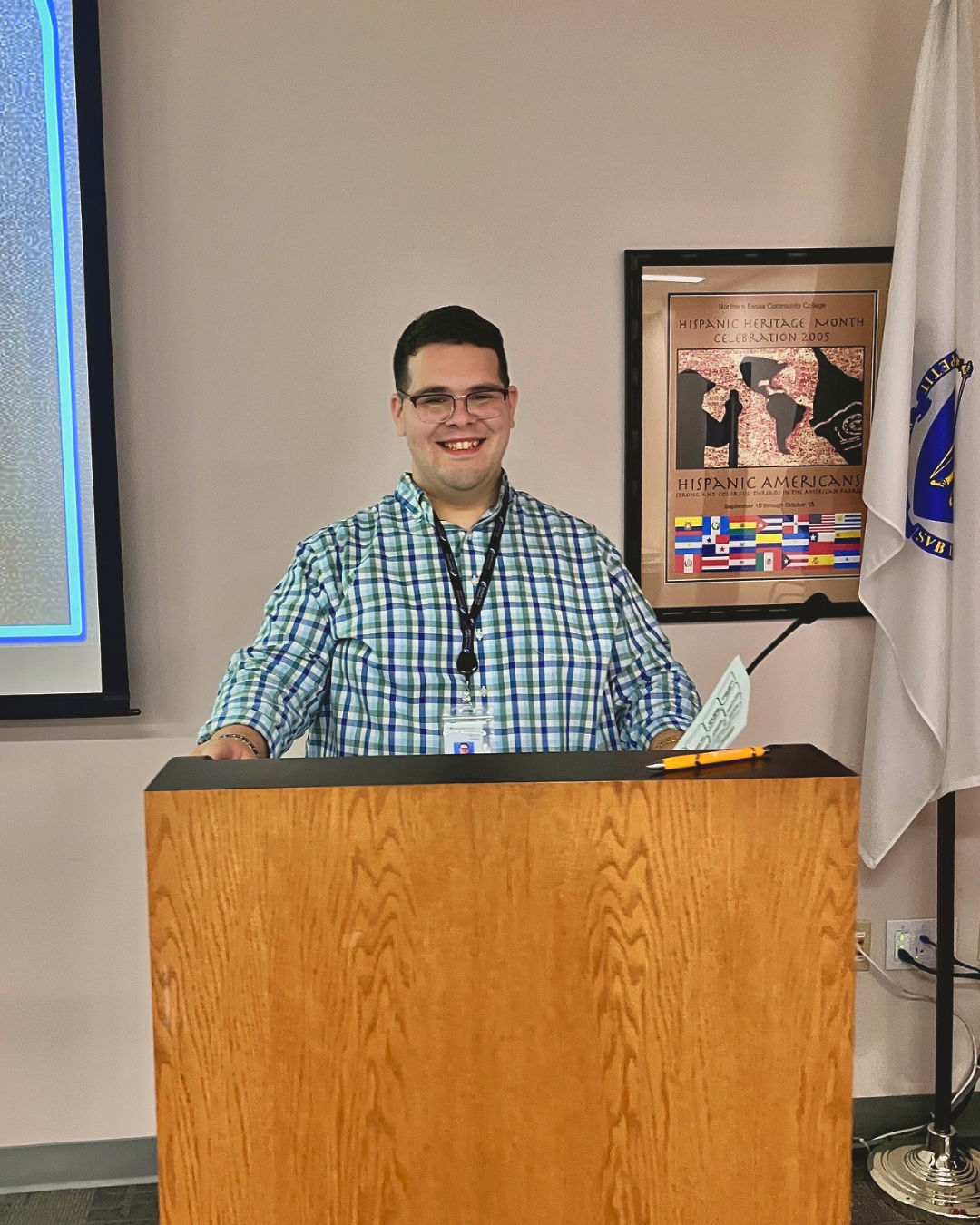
Gregory Blomgren spends his days teaching 4th graders at Tenney Grammar School in Methuen. Two nights a week, he drives to Northern Essex Community College’s Center for Adult Education (CAE) in Lawrence and teaches an entirely different kind of student: adults who left careers, degrees, and sometimes entire professional identities behind to build a new life in the United States.
It’s a demanding schedule — 6 to 9 p.m., twice a week, on top of a full-time teaching job. But for Blomgren, it’s never felt like a burden. “With the right group, it goes by quick,” he says.
Teaching ESOL wasn’t a career pivot for Blomgren — it was almost inevitable. His father spent 34 years as a teacher and principal in Methuen. His mother taught bilingual education and ESOL for years. Aunts and cousins have taught ESOL too.
“While I come from a large family of educators, it is who I am,” Blomgren says. 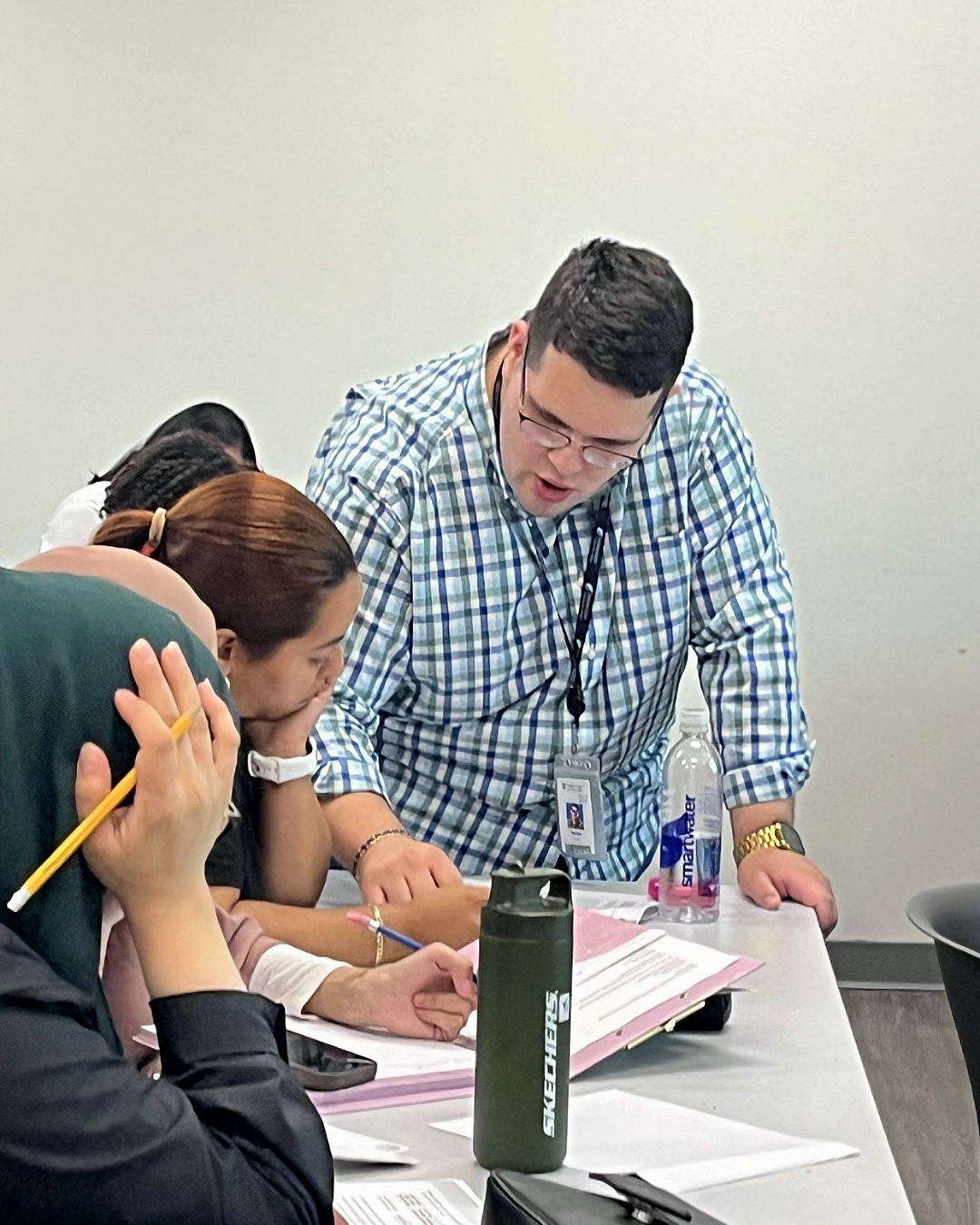
He got his start supporting English learners inside his own 4th grade classroom, working alongside a colleague, Stephanie Fernandez, who also taught at NECC’s CAE. When the department needed more instructors, she encouraged him to apply. He’s now in his fourth semester at NECC, teaching Level 6 — the highest level of the program, the last stop before students move into NECC’s Transition to College program. He’s also pursuing a Master of Education in Curriculum and Instruction, with an emphasis in ESOL, at Merrimack College.
Ask any teacher why they do this work, and most will point to a moment. For Blomgren, it happened in the foyer of NECC’s Dimitry building just last week.
A former student — someone he hadn’t seen since her graduation the previous June — called out his name. She was back on campus for her first night class in the Transition to College program, the pathway students enter after completing Level 6 ESOL.
She threw her arms up and shouted, “I am a college girl!”
She has lived in the United States for less than a year. She will be the first in her family to attend college here.
“In this moment I was reminded why I do this,” Blomgren says. “It was for these moments.”
Every program at NECC’s Center for Adult Education — English classes, ESOL-supported career skills, GED/HiSET preparation, SNAP Path to Work, Transition to College, Family Learning Collaborative, Spanish Literacy program — is free. For students who are, in Blomgren’s words, working some of the hardest jobs physically and mentally while raising families in a new country, that matters enormously.
“The last thing our students need is an extra barrier between themselves and the ability to do better,” he says. “Making sure CAE’s programs are free is making sure students have hope for a better life and more opportunities here in their new country.”
That mission shows up in the makeup of his classroom, too. Many of his adult students arrived with degrees — some advanced — earned in their home countries as doctors, lawyers, accountants, engineers, and teachers. Those credentials don’t always transfer. What does transfer, Blomgren says, is the knowledge itself.
He often thinks of something CAE’s executive director, Jacqueline Lynch, tells students: “Your knowledge and degrees are in your brain and hands, not in the language you speak.”
“Even to this day, when I hear it, I am still struck,” Blomgren says. “It is so true.”
Adult learners juggle the same demands as any student: homework, deadlines, expectations. But layered on top are full-time jobs, families, and the ongoing work of learning a new language while rebuilding a professional life from scratch.
What surprised Blomgren most, he says, is what his students have taught him in return: resilience.
“I am a busy person. I like to be busy; however, I’m a major procrastinator,” he admits. “I see my students continue to power through the struggle, academically and personally, that I have no excuse to give up. If they can do it, so can I.”
Blomgren also teaches at a grammar school where more than a third of students speak a language other than English at home — which means his two classrooms overlap more than most people realize. He regularly meets the families of his 4th graders while teaching their parents, aunts, or neighbors at NECC.
That overlap is exactly the point of adult education, he says — it doesn’t stop with one learner.
“When a drop of water lands in a still pond, the water around it begins to ripple,” Blomgren says. “This is the same for our adults, their families, and communities. Once one person in a family joins classes, their children take school more seriously, their family, siblings, cousins, neighbors, and friends start taking classes too.”
For adults nervous about going back to school or improving their English, this instructor’s advice is direct: “Do it. There is no excuse not to.”
“Imagine the world of opportunities you can have when you speak another language,” he says. “If you have a dream to be and do something different, now is your chance. We will meet you where you are at and support you all the way. Once a CAE student, always a CAE student.”
Asked why the work matters to him, in one sentence, Blomgren doesn’t hesitate: “I can help open doors of opportunities to parents, so that their children can explore without limitations.”
The Center for Adult Education (CAE) at Northern Essex Community College offers free programs to help adults build the skills they need for school, work, and their communities — including English language classes (Levels 1–6), ESOL-supported career skills training, GED/HiSET preparation, and a Transition to College pathway that allows students to take up to five college courses at no cost.
CAE is located at 45 Franklin St., Lawrence, MA, and can be reached at (978) 655-5840 or cae@necc.mass.edu.