

Professor Houle Brings Creativity and Environmental Stewardship Together at a Bus Stop Near You
As Earth Month invites reflection on our relationship with the natural world, NECC Art & Design Professor and local public artist Jenn Houle is transforming an everyday experience—waiting for the bus—into an opportunity for wonder, learning, and connection.
Houle is the lead creative force behind Birds by Bus, a regional public art initiative that blends environmental storytelling with community access. The project, developed in partnership with Essex County Community Foundation, Merrimack Valley Planning Commission, Creative County Initiative, and MeVA Transit, is supported by a National Endowment for the Arts Our Town grant and is already reshaping how residents encounter both art and ecology in the Merrimack Valley.
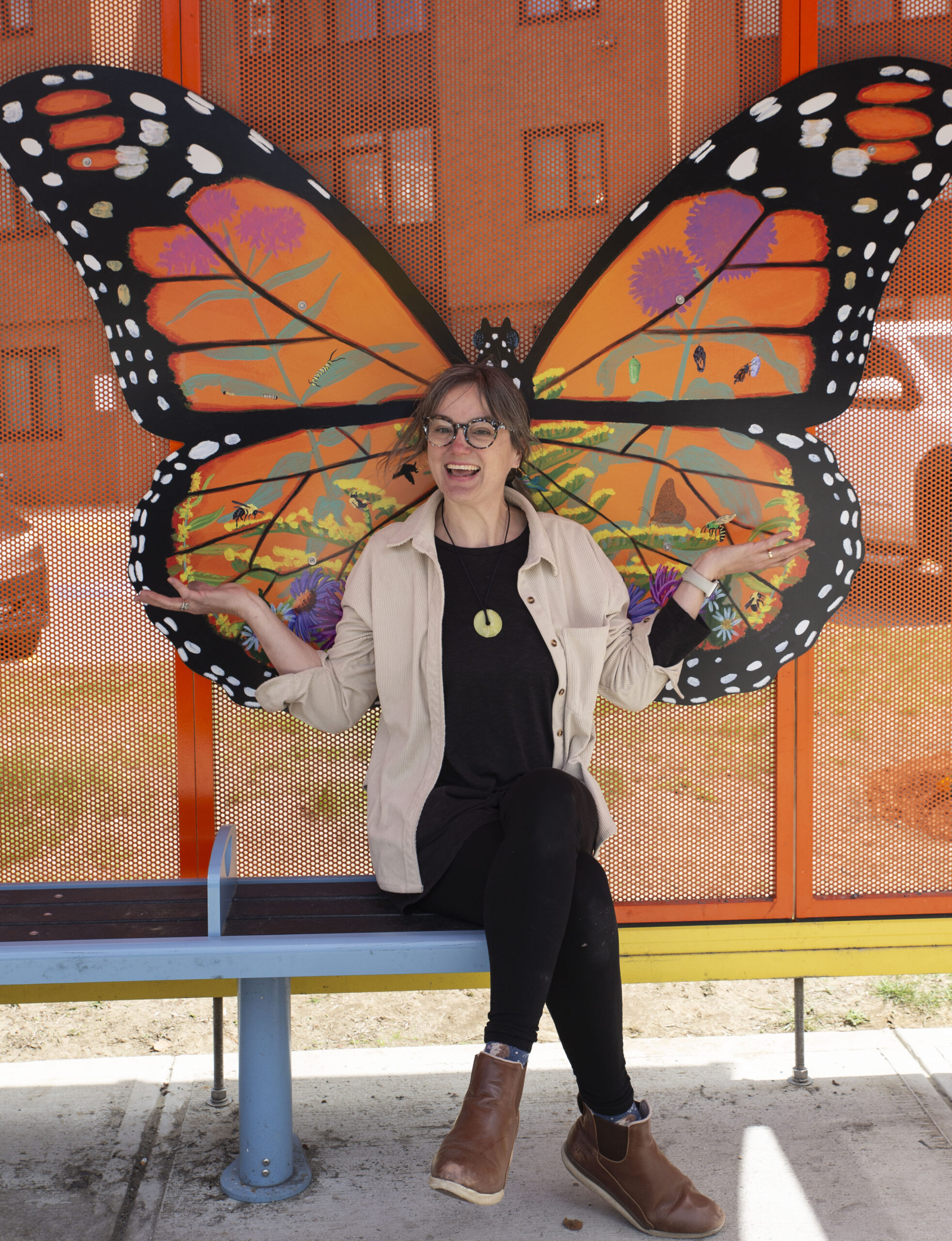
Professor Jenn Houle at one of her monarch butterfly Birds by Bus installations
At the heart of Birds by Bus are vibrant murals installed across 32 bus shelters throughout Essex County. Each piece features native birds and butterflies intertwined with the plants and pollinators that sustain them—visual narratives that transform transit stops into what Houle describes as “a visual hook.”
“I want the work to look beautiful,” she explains. “Bright colors, flowers, birds—it draws people in. And then that beauty can spark curiosity.”
That curiosity is key. Rather than leading with the alarming urgency of mainstream climate crisis messaging, Houle’s approach is rooted in positivity—inviting viewers to notice, to wonder, and ultimately to care.
“Conservation starts with noticing,” she says.
The murals are paired with thoughtfully designed signage that introduces riders to the life cycles of each species and offers accessible, actionable steps—like planting native species, reducing pesticide use, or supporting dark sky initiatives.
Central to Houle’s work is the concept of botanical belonging, a term coined by author and scientist Robin Wall Kimmerer. For Houle, the phrase resonates both personally and artistically.
Growing up in New England, she developed a deep connection to local landscapes—the white pines on the horizon, the late-summer bloom of goldenrod. Today, that connection informs her artistic vision: encouraging people to recognize the plants and animals that define their own sense of place.
“It’s about understanding the local flora and fauna that are unique to your area,” Houle says. “These are the things that shape our identity, even if we don’t always realize it.”
Through Birds by Bus, she aims to elevate these everyday encounters—turning what might be overlooked into something meaningful and memorable.
The choice of bus shelters as the project’s canvas is intentional. Public transit, Houle notes, reaches people where they are—across economic backgrounds, neighborhoods, and daily routines.
“Bus stops are where people are already going—to work, to school, to get groceries,” she says. “It’s a place where art can meet people in their everyday lives.”
The project also includes “Leaf Lollipop” signs—green, leaf-shaped markers that guide riders to nearby parks, pollinator gardens, and conservation lands accessible via transit. These wayfinding tools help bridge the gap between awareness and action, making it easier for residents to explore local green spaces.
From Parker River National Wildlife Refuge to neighborhood pollinator gardens, the initiative connects public transportation with environmental discovery, reinforcing the idea that nature is not distant—it’s right here in the Merrimack Valley.
One of Houle’s most compelling artistic choices is her focus on common species—chickadees, cardinals, and everyday pollinators—rather than rare or endangered ones.
“There’s something profound about the common,” she explains. “When you really look into their life cycles, it’s remarkable that they’re still here, thriving in landscapes dominated by humans.”
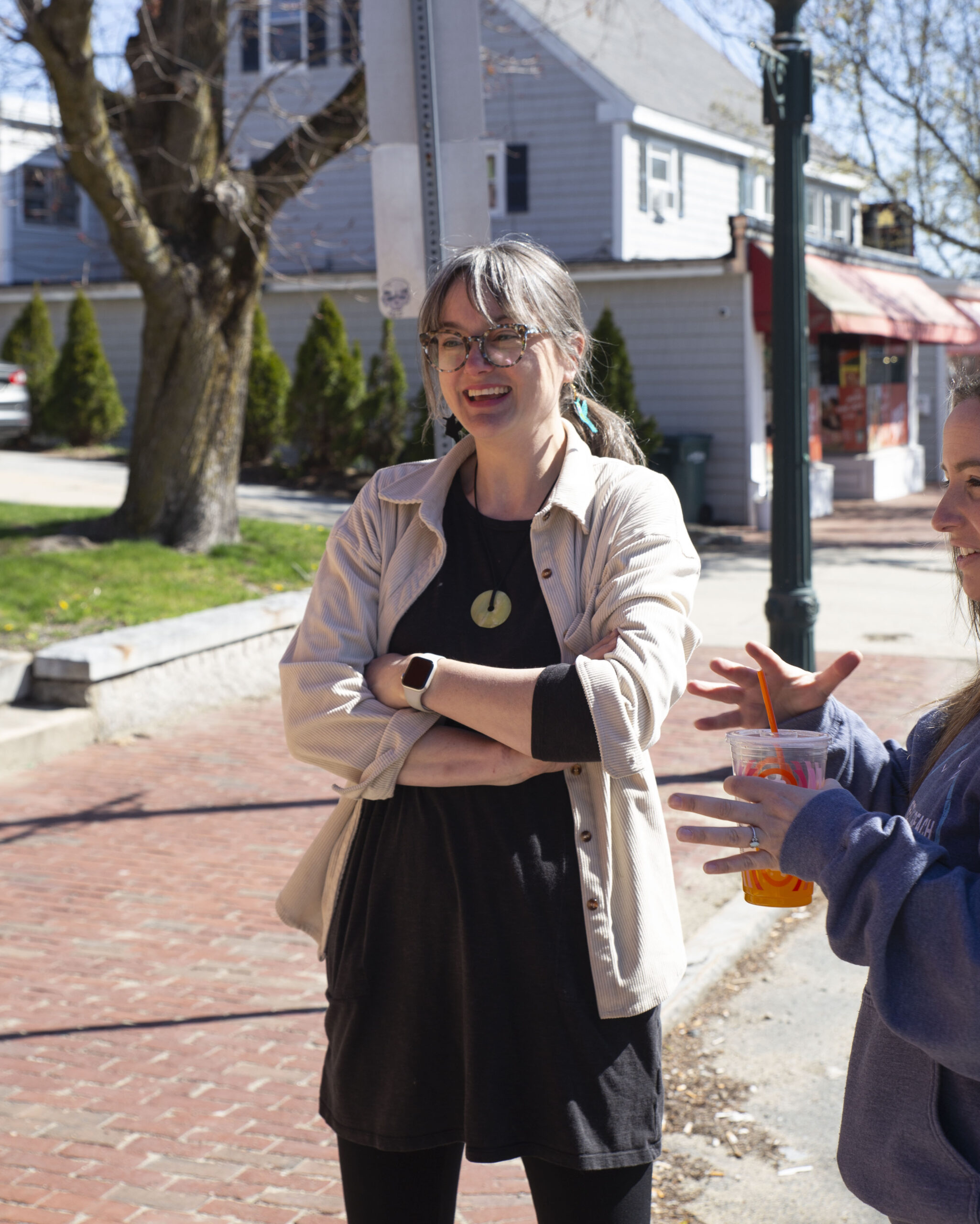 Each mural embeds the full life story of its subject—from caterpillar to butterfly, or from seed to habitat—within a single composition. This layered storytelling reflects the interconnectedness of ecosystems while making complex ecological relationships accessible to a broad audience.
For Houle, Birds by Bus is an extension of her role as an educator at NECC—one that expands the classroom into the community.
Her work often intersects with local conservation groups, libraries, and public programs, including seed lending libraries and planned “Birding by Bus” tours that will invite residents to explore the region’s biodiversity firsthand.
The project also reflects a broader ambition: fostering long-term cultural change in how people relate to the environment. “I’m interested in systems change,” she says. “How do we shift our cultural relationship to nature? This is about planting seeds—literally and figuratively.”
While the success of a project like Birds by Bus can be difficult to quantify, Houle hopes to see tangible outcomes: increased engagement with conservation groups, more native planting, and a growing awareness of local ecosystems.
But perhaps the most meaningful measure is less concrete. “If someone starts noticing birds more, or plants something new, or just feels a connection—that’s success,” she says.
As Earth Month highlights the significance of environmental stewardship, Houle’s work offers a hopeful, community-centered approach. By blending art, science, and accessibility, Birds by Bus demonstrates how small moments—waiting for a ride, glancing at a mural—can lead to larger shifts in awareness and care.
In the Merrimack Valley, those moments are already taking root. Thanks to educators like Houle, they’re helping cultivate a more connected, vibrant, and environmentally conscious community—one bus stop at a time.


